What happens to a sole after the rain
Ground · 4 min read · 2026.08.30
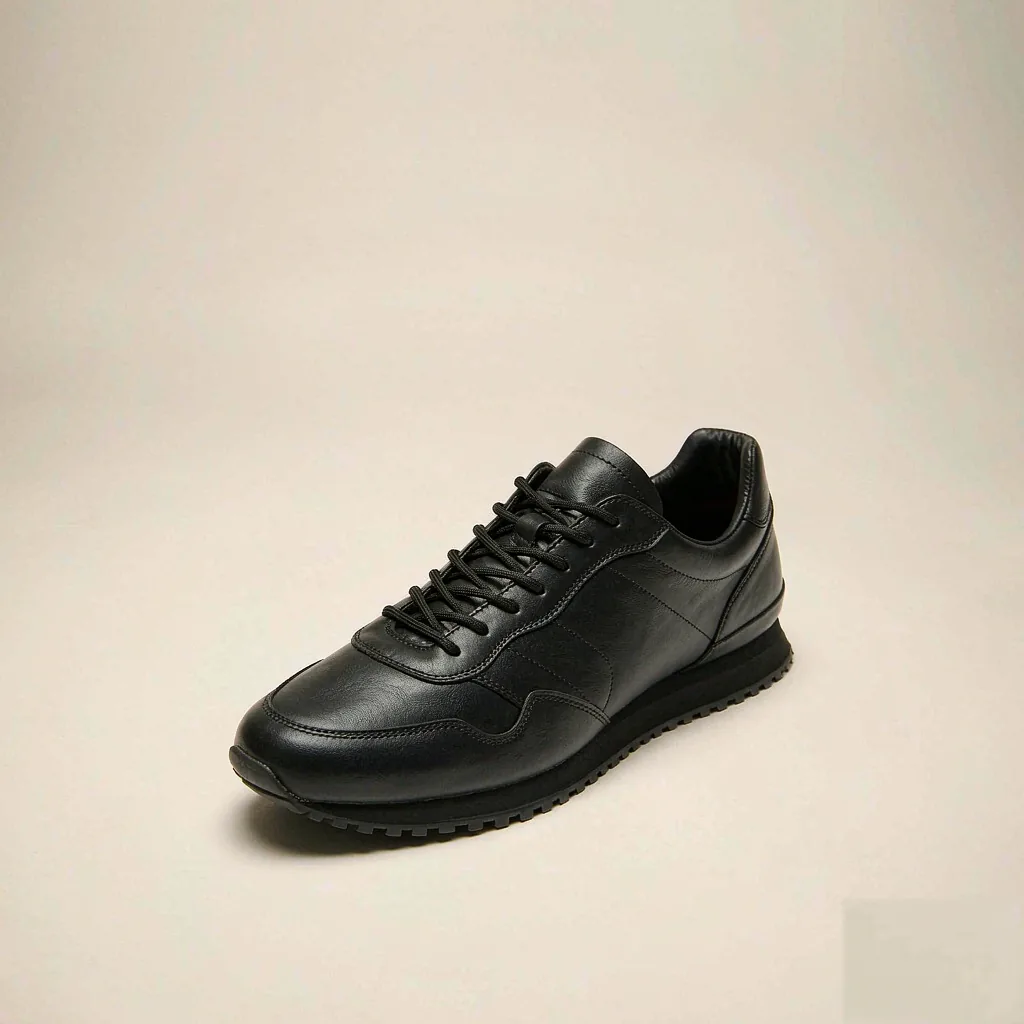
The experiment was simple: three pairs of GR03, three treatments, on an outdoor platform at the Hangzhou workshop, rained on from 1 June to 21 June.
- Pair A: worn two hours a day, through wet ground and standing water.
- Pair B: rained on, never worn, water left to evaporate.
- Pair C: wiped dry immediately after each soaking, kept where air moves.
On day twenty-two, we cut them open.
Results
Pair A: a white bloom appeared in the adhesive layer between sole and upper — the start of hydrolysis. The stitching was intact. The midsole foam had absorbed about 4.2% water.
Pair B: looked the worst from outside — the leather darkened, the edges curled. But the inside was dry and the adhesive unchanged. Leather dries eventually.
Pair C: almost no change. The only difference was ninety seconds of wiping a day.
The conclusion is not “wipe them dry”
The conclusion is: getting wet is not fatal. Staying damp is.
Water alone does not dissolve adhesive. Water plus time plus no airflow does. So the useful move is not wiping the surface — it is opening the shoe up, pulling the insole, and leaving it where air moves.
What we changed
From the spring 2027 run, the underside of the insole gets a row of vent holes, and we moved to a foam that absorbs more slowly. It will not make the shoe waterproof. It will make it dry a little faster during the rainy season.
The rainy season will not get shorter. The shoe can dry a little faster.